
Ring sizing
Gems Mart Jewellers provides comprehensive ring sizing guidance through two primary measurement procedures and helpful reference tables for Indian ring sizes.
Procedure 1 — Thread or paper method
Step 1. Cut a thin strip of paper or thread. Wrap the paper or thread around your finger. Mark the spot where the paper or thread meets.
Step 2. Measure the length of thread with a ruler and cross-reference with the sizing chart below.
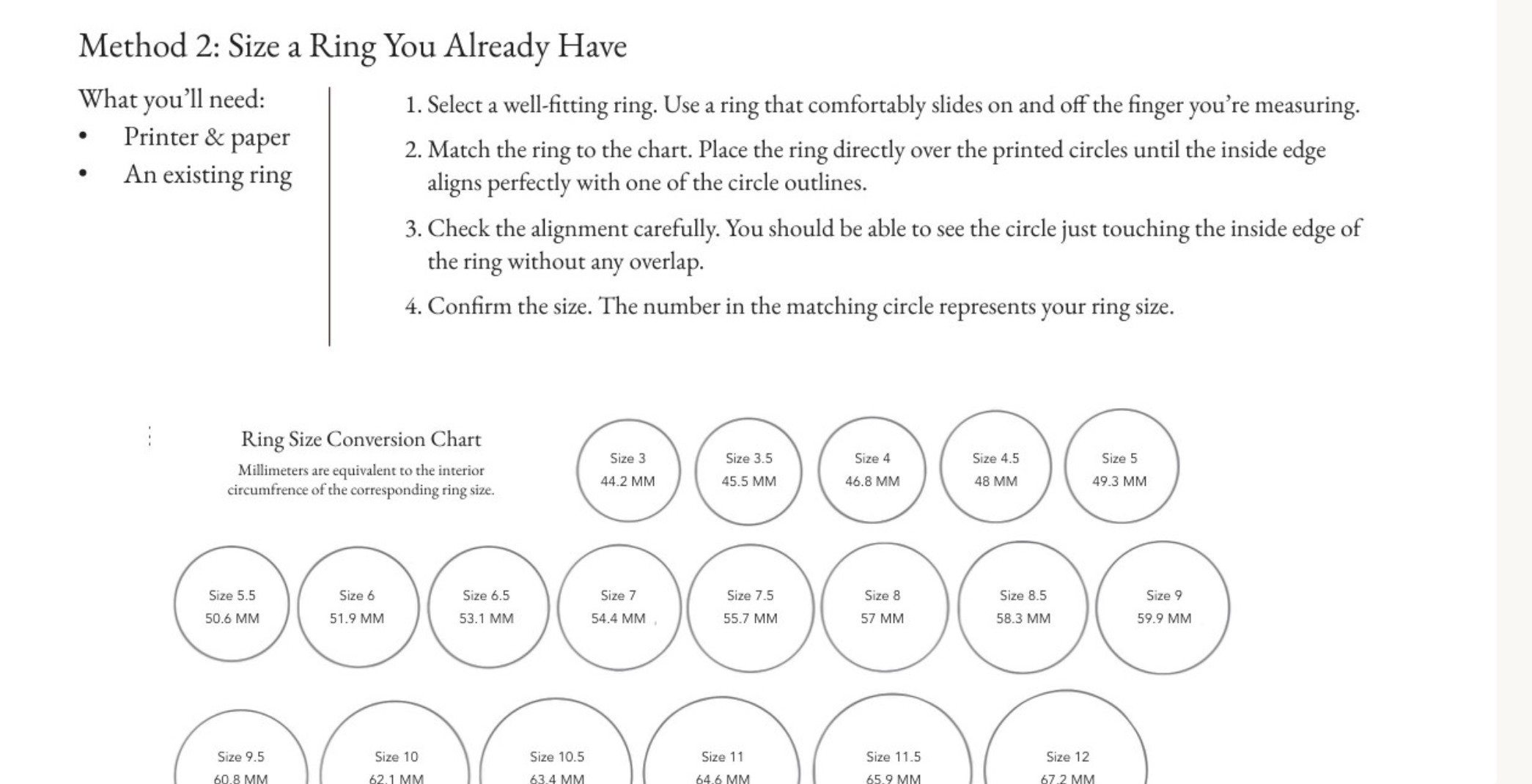
Procedure 2 — Existing ring method
Measure the inside diameter of a ring you already own in millimetres, then compare against the diameter chart below.
Ring size — measurement steps
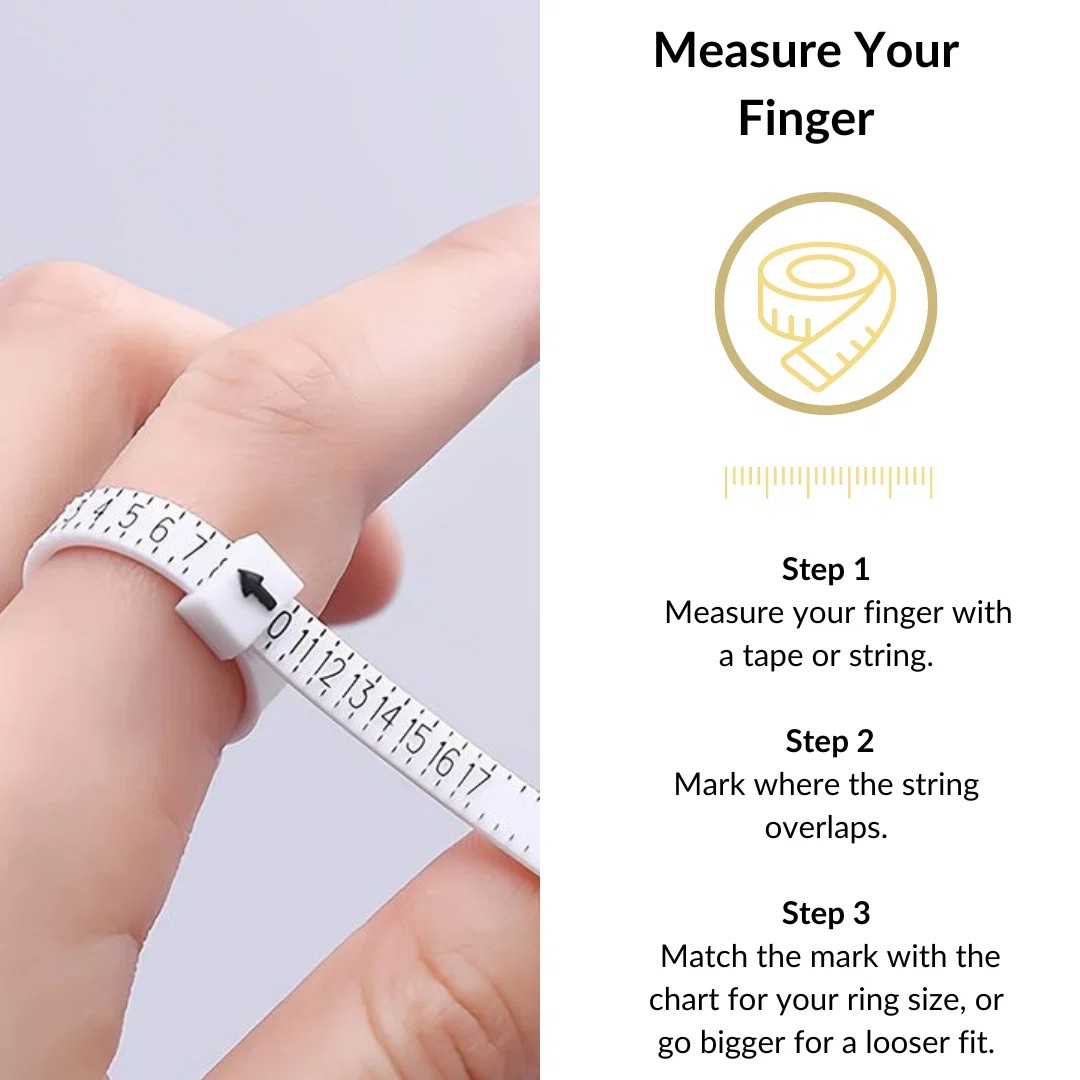
Ring size — printable chart
Key sizing tips
- Average women's ring sizes range from 9–14 (Indian); men's typically 17–22.
- Measure in the evening, when fingers are largest.
- Avoid extreme temperatures during measurement.
- For bands thicker than 6 mm, size up half a size for comfort.
Necklace sizing
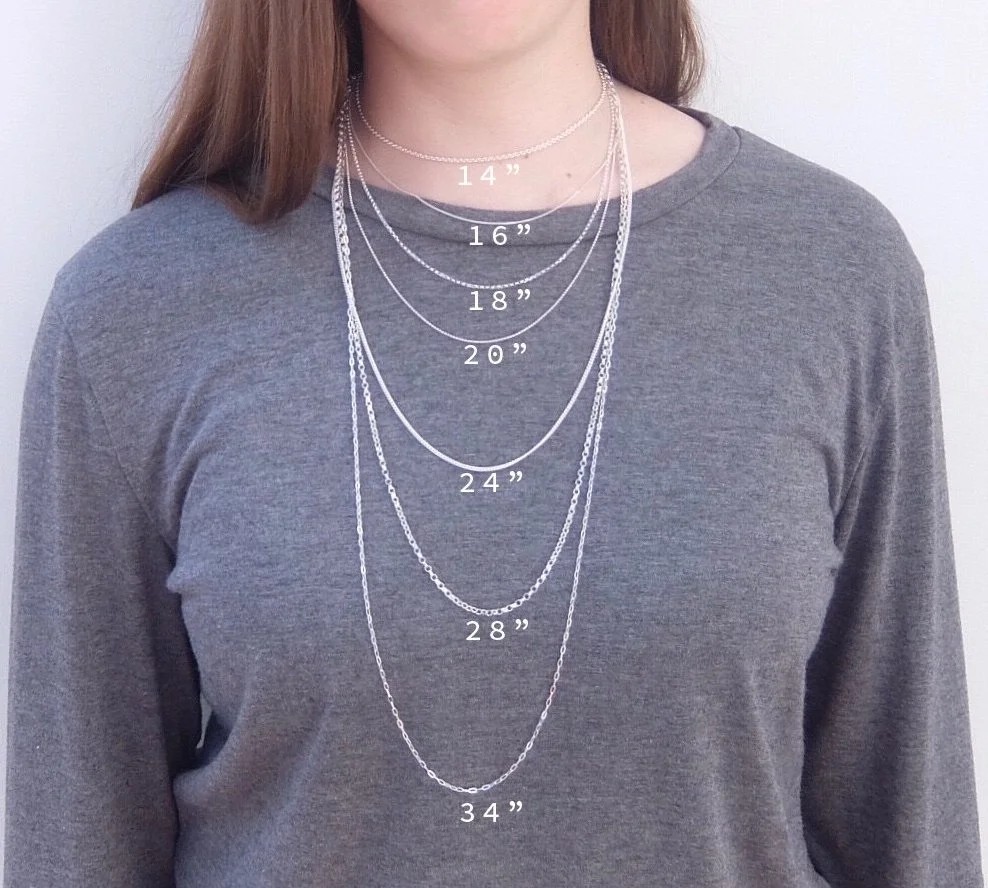
Necklace lengths chart
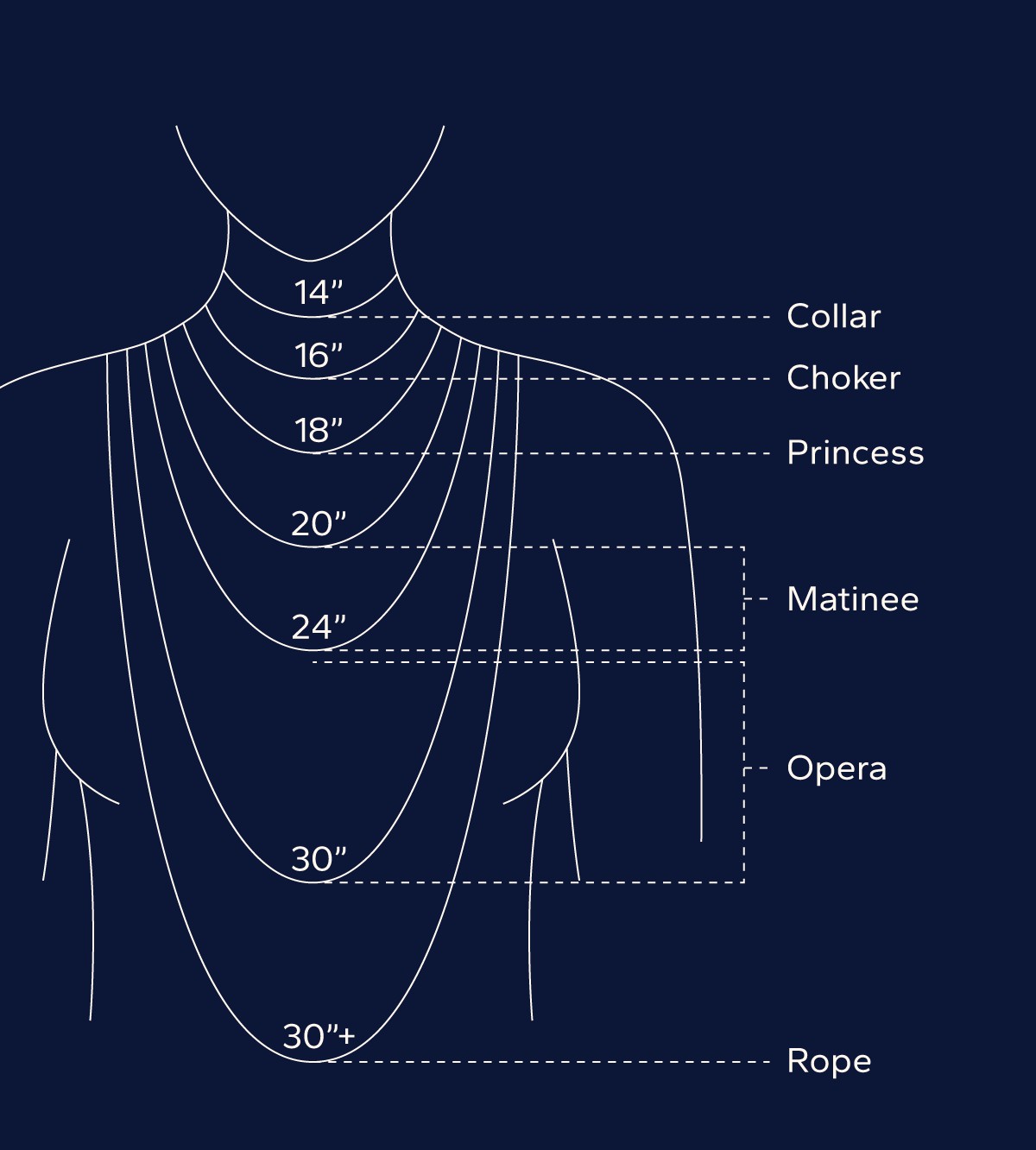
Necklace lengths on body
Bangle sizing
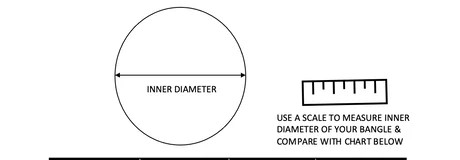
Bangle inner diameter
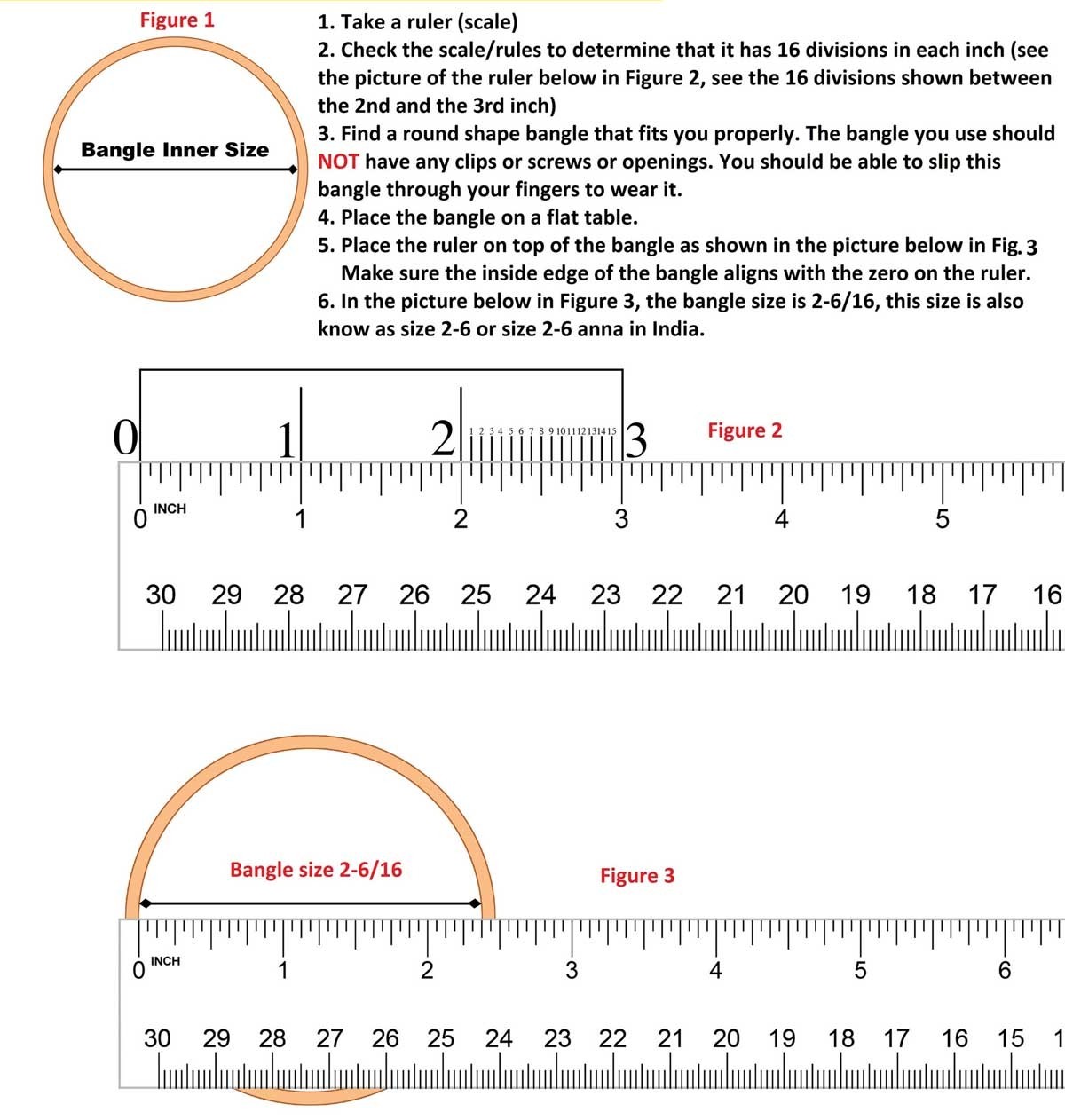
Detailed ruler measurement guide
How to measure your hand
To determine your bangle size, you'll need a measuring tape or thread and a scale. Bring your thumb and little finger together and measure where your hand is the widest.
Step 1. Cut a thin strip of thread or paper. Bring your thumb and little finger together. Wrap where your hand is the widest. Mark the meeting spot of the thread or paper end.
Step 2. Measure the length of the thread with your scale. Make sure your thumb stays near to the fingers.
Tips before buying bangles
- It is always recommended to buy bangles that are a bit larger (1/2 to 3/4 inches) than the size of your wrist.
- Use silk or crepe material to help slide bangles on easily.
- Consider adjustable, openable bangles for online purchases.
- For diamond bangles, ensure higher-quality stones and durable settings.
- Store bangles in appropriate boxes to maintain shape and prevent damage.
Bracelet sizing
Wondering how to find your bracelet size, what size would suit you the best, and how to style your bracelets? Allow us to guide you to your perfect match.
Measure your wrist size
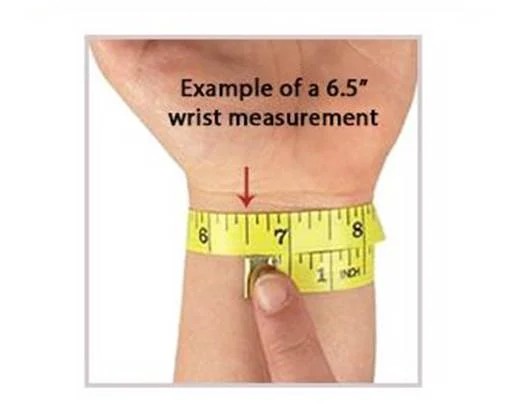
Step 1. Wrap a tape measure around the wrist bone so that it fits snugly without feeling too tight or too loose.
Step 2. Mark where the tape measure overlaps. This is the exact circumference of your wrist.
You can substitute the measuring tape with a string or ribbon and use a straight ruler to measure the length from the point of overlap to the end.
Measure the length of a bracelet that fits well
If you already have a chain bracelet that fits right, this is how to substitute wrist tape measurements with the bracelet chain length:
Step 1. Open your bracelet and place it on the table.
Step 2. Using the centimetre or inch edge of a ruler, measure the length of the bracelet cord or chain from the outer edge of the clasp to the other end of the bracelet.
The flexible tape measurements are the circumference of your bracelet. To convert circumference to diameter, divide the millimetre (mm) circumference measure by 3.14 (D = C ÷ 3.14), or use an online converter.
Bracelet size chart
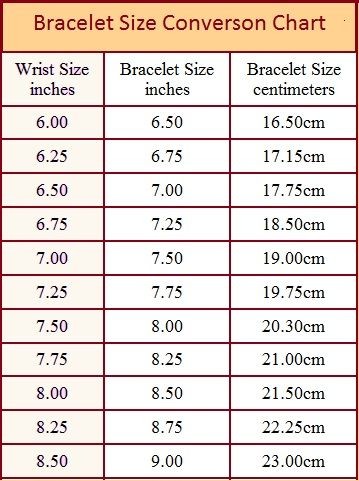
Use the chart above to find your recommended bracelet size based on your exact wrist measurement. If your wrist is between two sizes, add this in your note to us with your order.